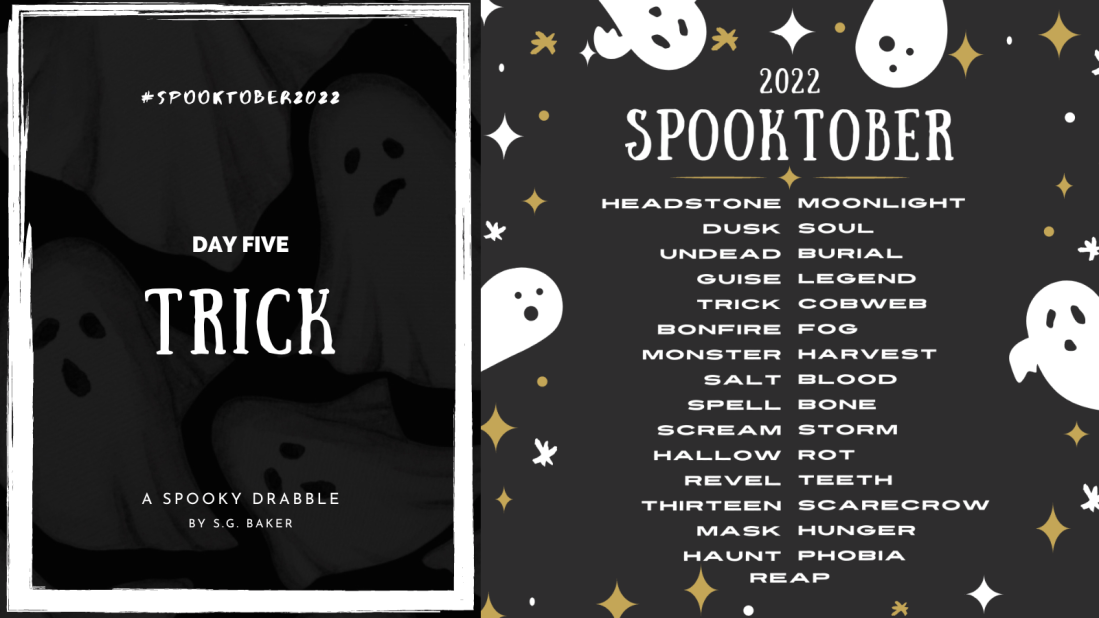
Spooktober 2022 Day 4: Guise

In the guise of your front door, I awaited your return home.

For weeks, I’d lurked there. You’d turned my limb shaped like your doorknob, not noticing the slight give to the bronze. You’d hung your Christmas wreath on the red door of my tongue, missing my fetid breath.

You’d missed my eye watching you from within the peephole.

Video Game Review: Windbound

During the Nintendo DS and Nintendo DS Lite era, I thoroughly enjoyed the Lost in Blue games, wherein you play as one or two characters shipwrecked and marooned on a deserted island. You search the island for food and resources to make tools and improved weapons, all of which help your explore farther outward from your home base in your efforts to escape the island. Recently, I had an itch to get back into the resources management and survival aspect of Lost in Blue, so I went looking for something similar.

The closest I found was Windbound, an adventure RPG available on the Nintendo Switch, which to my eye looked like Lost in Blue but with sailing. So like The Legend of Zelda: Windwaker, a sailing mechanic I found very fun for exploring. Windbound promised the ability to upgrade your ship, hang glide, and explore islands. There were negative reviews, but what games doesn't have those? I jumped in anyway.

That... that was a mistake. Let me explain why.

Charge Your Prose: Using all five senses to bring readers into your story

When I made a conscious choice early in my writing career to include all five senses in each short story or scene, no matter what, readers began telling me, “I really felt like I was there.” The shared experience of senses invites your readers into your narrative, drawing on memory to paint a vivid picture they can see, hear, touch, smell, and taste.

Readers know the swish of long grass against their shins, smoke tinging a morning red, a mouthwatering cake baking in an oven, the coppery flavor of a bitten tongue, the painful zing of an electric shock. Constant sensory input, telling them what’s going on. Nothing builds a fully three-dimensional story for your readers like filtering all five senses through your point-of-view character’s physical experiences.

However, utilizing the senses in your prose requires some finesse and some thinking outside the box. All five senses should appear in each of your scenes, but some are harder to incorporate than others. Here, I’ve outlined both the order of frequency that each sense typically appears in prose, as well as suggestions for digging deep into representing each included sense.

Book Review: The Good Fortune of Bad Luck by Travis Erwin

In The Good Fortune of Bad Luck, Destiny Holt has laid out a plan for the trajectory of her life to take her out of a childhood of abandonment and poverty into a nursing degree, a nice home, and a family. She believes in making her own luck through the will to forge an escape from the fate that her impoverished birth would dictate.

By contrast, Dillon Konrad has kept his life in a holding pattern of waiting for the stars to align and bring him his soul mate, a job he likes, and lottery winnings, all based on a prophecy from his grandmother, who accurately predicted the death of his parents. He believes in letting fate make his decisions, trusting that openness to the will of the universe will bring him good fortune.

The Good Fortune of Bad Luck examines which of these two philosophies, if either, will prove true as Destiny's and Dillon's lives spin around—and inexorably toward—each other.