Once again, much like my recent foray into LitRPG through (the entirety of) the Dungeon Crawler Carl series, I find myself reading in a genre I typically wouldn’t, that being psychological thrillers. But Someone Who Can Help by Jenny Maloney doesn’t just hit the psych-thriller nail on the head, it also skirts into near-future science-fiction, with technological advances familiar to us even today, just more ubiquitous in daily life. I can get behind a science-fiction thriller like this one, as Someone Who Can Help explores the lines between personal freedom and community safety, what makes a killer and what makes the kind of person who can catch one, and peace versus mere complacency within the status quo.
Under constant surveillance — from law enforcement-operated drones to biometric-data monitoring to a nightly curfew — the citizens of Sangre River, Colorado and broader society at-large no longer live in fear of murderers. Operators of homicide prevention centers around the nation offer guidance to those who call in worried about their impending actions and protection for those whom such callers might harm.
Never mind that contacting the homicide prevention hotline almost guarantees a scarlet letter A marking the individual as dangerous, one that gets them a soothing voice on their implanted phone anytime they get riled and no way to hang up. Profiling rules the day, with a single misplaced word or action a one-way ticket to getting stripped of personal autonomy. What does an inability to express anger at bad behaviors, inconveniences, or injustices matter with total safety as the trade-off? Society and citizenry snake through the narrative like characters themselves, whispering such questions through subtext rather than overt narrative, because such a world represents normalcy to this generation.
Enter Julie Ruhl, who has longed for a position as an operator for the homicide prevention center since a difficult childhood made her certain of the importance of the center’s motto of Interrupt, Neutralize, and Control for preserving public safety. She moves through an uncertain world with total certainty in the prevention center’s methods, even as scenes unfold around her that throw those methods into question. However, as the story builds, her motives become murky, taking on a potentially darker reasoning when she comes up against Mr. Thursday. Though his antics have long gone ignored as a method for getting violence out of his system without causing actual harm, Julie quickly recognizes the true risk he represents.
But who can detect a dangerous person but someone also molded by danger? And will such a person prove an asset to society or one to be interrupted, neutralized, and controlled?
In the ensuing game of cat and mouse between Julie and Mr. Thursday, they each take on the role of the cat and the mouse, equally matched and only able to truly speak between the lines with each other. As the question of Mr. Thursday’s identity spirals around and around a small cast of characters, the twist eventually ceases to be the unveiling of the villain and becomes the interrogation of what makes a villain in the first place — action or proclivity?
I adored how even the style and tone of the narrative demonstrated the necessity of perfect personal control over emotion and thought. Julie as a character represents the model citizen, fully bought in to Sangre River’s and the homicide prevention center’s way of life. Her work saves real people from harm, to themselves and to others, proving the ends justify the means.
But as a result, she barely acknowledges her own past and traumas, as keeping a tight lid on them protects her from losing her position, or even meeting the same fate as those who call in. Our slow reveal of her inner character, past, and desires only comes at the slipping of her grip on herself in the face of her conflict with Mr. Thursday. By the end, we’re left asking ourselves, to what lengths will Julie have to go to ensure her own safety in the safest society the world has ever known?
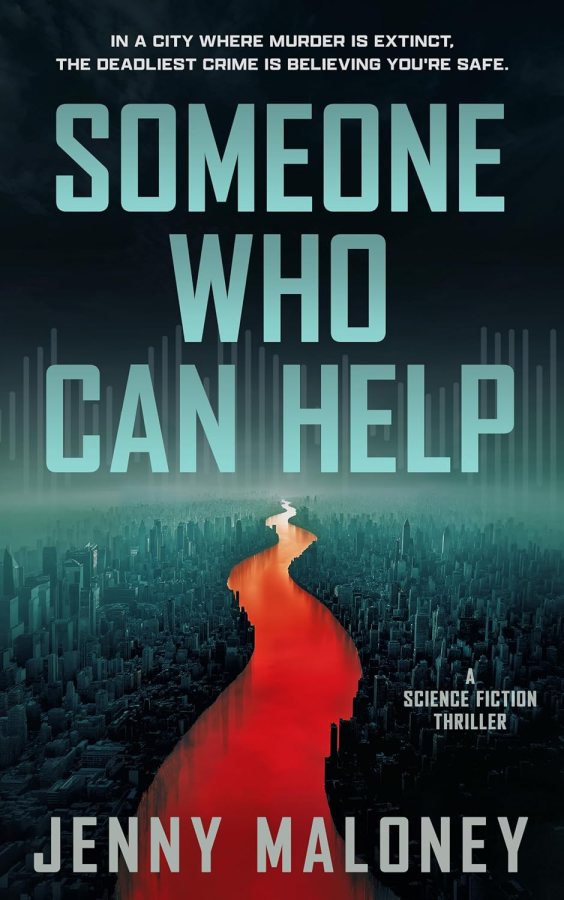
Someone Who Can Help questions the cost versus the benefits of the increasingly Orwellian society we find ourselves hurtling toward. I recommend this book for anyone concerned about criminal profiling, public surveillance, and thought policing as crime-prevention tactics. It’ll make you think and avoids leading you to one conclusion or the other.
Someone Who Can Help releases on October 13, just a couple days after this review goes up, so make sure to preorder your copy today. Find it wherever books are sold!

Thanks for reading!
Subscribe for new stories, sneak peeks, book reviews, and updates delivered to your inbox and social feeds.
Summer’s Latest
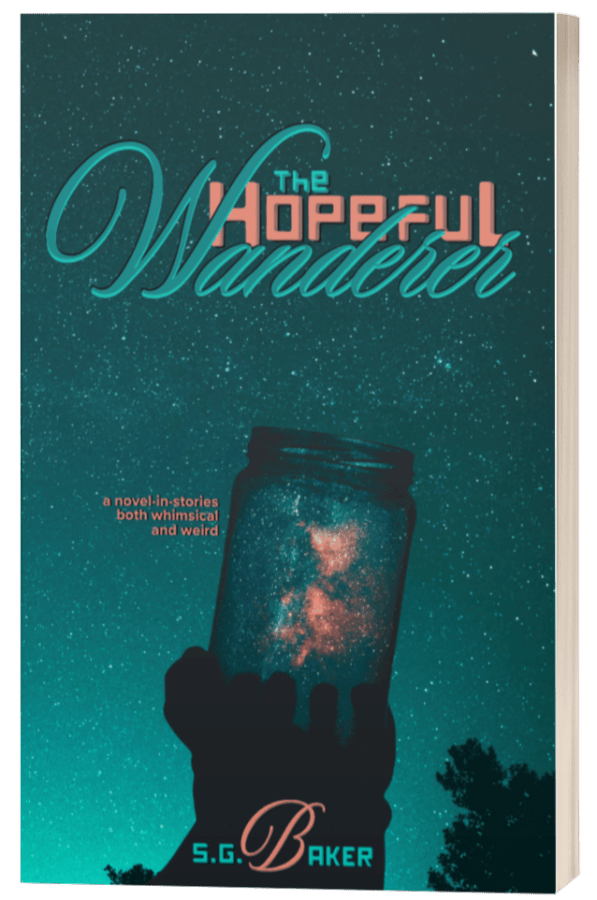
The Hopeful Wanderer
Wander a world driven from mundane to magical by a secret hidden at its heart.
A slow apocalypse has corroded a distant planet, with the uncanny living in uneasy commune alongside those remaining. On a forgotten quest from the stars, the Wanderer roams among them, through crumbling societies and vibrant wildernesses, navigating a murky path toward an incredible past.
While helping and receiving help-or hindrance-from strange denizens of unusual destinations, the Wanderer must finish righting a wrong that threatens to extinguish the universe itself. Should memory of the responsibility return at all.
Featuring
- 100 Hopeful Wanderer tales
- 20 new short stories
- 10-episode revelatory ending
- 100% revised and expanded
A far-future science fantasy with sub-tones of soft-apocalypse and climate change, this hopeful adventure combines exploration, eeriness, and wonder across 100 short tales.
Join readers who loved the web series and journey alongside them in discovering the Wanderer’s wondrous past and hopeful mission to save the stars.
Woven through with themes of acceptance, kindness, beauty in difference, and the wonder and strangeness of nature, this story will charm and delight readers of Mushishi by Yuki Urushibara and fans of The CryptoNaturalist and Strange Animals by Jarod K. Anderson.
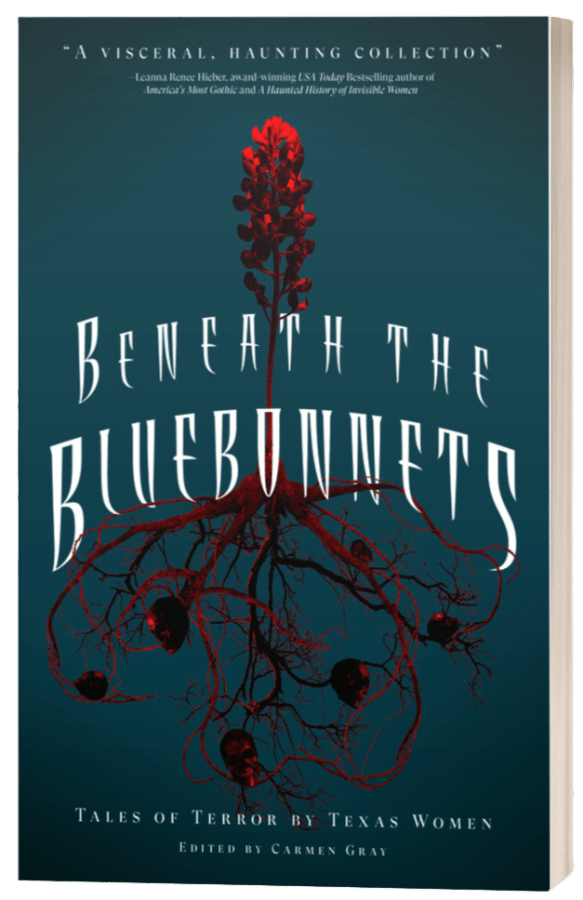
Beneath the Bluebonnets: Tales of Terror by Texas Women
Read my eco-horror short “Well Being” in this fabulous new anthology, in which a mother follows strange impulses from tainted water to find her daughter.
From Mary Shelley to Tananarive Due and Mariana Enríquez, women have long shaped horror—often without equal recognition. Living closest to the genre’s edge, women know these fears firsthand: lost autonomy, violence, childbirth, survival.
Set in Texas, a land of haunted histories and increasingly restrictive laws, Beneath the Bluebonnets emerges from the raw intersection of terror and endurance. Written by twelve Texas women writers: R. J. Joseph, Lauren Oertel, L.H. Phillips, Kathleen Kent, Madison Estes, Jess Hagemann, Emma E. Murray, Jae Mazer, Iphigenia Strangeworth, Jacklyn Baker, S.G. Baker and edited by Carmen Gray, this collection is urgent, unflinching, and deeply haunting—stories that refuse to look away.
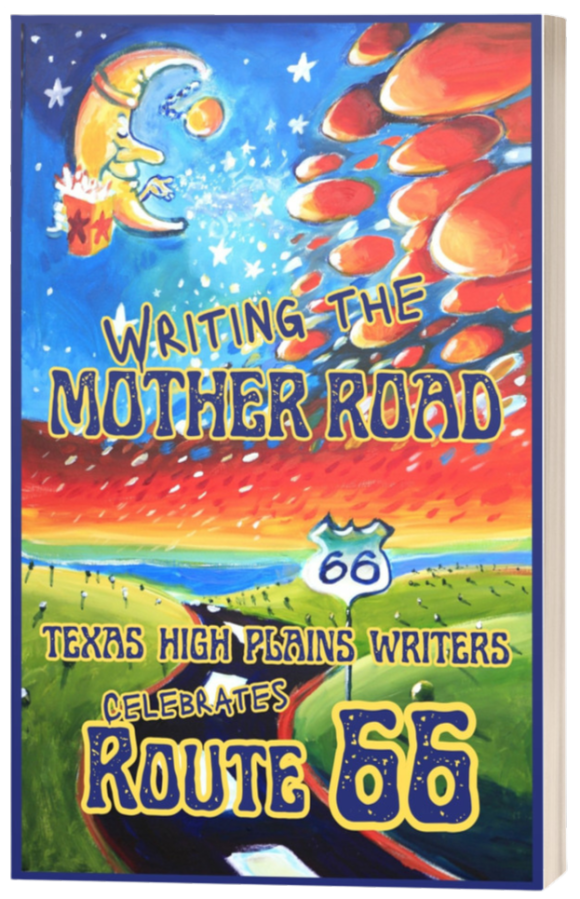
Writing the Mother Road: Texas High Plains Writers Celebrates Route 66
Route 66 isn’t just a highway—it’s a legend.
In Writing the Mother Road, the Texas High Plains Writers invite you to travel America’s most iconic stretch of pavement through a rich collection of short works inspired by the sights, stories, and spirit of Route 66. Inside these pages, you’ll find essays, memoirs, historical reflections, whimsical adventures, and imaginative tales ranging from science fiction to fantasy—all tied together by the culture and charm of the Mother Road.
For generations, Route 66 has fueled livelihoods, sparked creativity, and shaped the towns and travelers who crossed its path. Now, as the road approaches its centennial, this anthology celebrates the enduring heartbeat of the Texas Panhandle and the unforgettable road that helped define it.
Show Your Support
If you enjoy my writing, please consider leaving a tip. All amounts welcome!


